
A platform,
not a promise
Humanoid and mobile manipulation platforms supplied, specified and sourced for pilots, research and service roles, described as what they actually are today rather than what the category is advertised to become.
This category is early, and we would rather you heard it here.
Humanoid robotics is the most heavily marketed corner of automation and the least proven. The platforms are real, the engineering is genuinely impressive, and almost none of it is yet a drop-in replacement for a defined production task. Any supplier who tells you otherwise is selling you a demo.
Our side of it, plainly. We supply, specify and source humanoid and mobile manipulation platforms, and we quote them properly, with the manufacturer's current specification rather than a headline figure. We do not develop humanoids. We do not write the locomotion or manipulation software, and we do not train the skills. Platform development is the manufacturer's. Application work and pilot deployment are the manufacturer's or a partner integrator's, and they carry the professional responsibility.
Two things are worth knowing before you watch another video. A large amount of impressive humanoid footage is remotely operated, edited from many attempts, or rendered. Ask everyone, including us, whether what you are watching is autonomous, and under what conditions it was recorded. Nobody honest minds the question.
And for most defined, repeated tasks, conventional automation still wins on every measure that matters: cost, speed, reliability, safety practice, support and spares. A fixed arm, a mobile robot or a conveyor will usually beat a humanoid at the specific job you have in mind. Where a humanoid earns its place today is in research, in evaluation ahead of a market that is moving quickly, in service and reception roles, and in tasks that are genuinely too varied for fixed equipment and too awkward to redesign.
Why buy a platform like this through us
-
We say what is not ready
Which capabilities are demonstrated, which are conditional and which are roadmap. In this category that distinction is the whole purchase.
-
Conventional automation offered first
If a fixed arm or a mobile robot does your job better, we will quote that instead and explain why, even though it is the less exciting order.
-
Specifications from the datasheet
The manufacturer's current published figures, in writing, with their test conditions, rather than the number from the launch video.
-
Teleoperation asked about openly
Whether a capability is autonomous, assisted or remotely driven. We put the answer in writing rather than letting a video imply one.
-
Pilots scoped as pilots
Success criteria, a fixed scope and an end date with a real decision at it, so an evaluation does not quietly turn into a production dependency.
-
The software questions raised early
Updates, skill licensing, cloud dependencies and what still works if a subscription lapses or a vendor changes direction.
-
Cameras and consent flagged
These platforms record. We raise the privacy, consultation and works council side before an order, not after installation.
-
An honest no
Wait a generation, redesign the task, or buy something conventional. We would rather lose this order than be the supplier of a machine you switch off.
Where people are genuinely using these today
A sample rather than a limit, and deliberately modest. Most of this list is research, evaluation and service work, because that is where the category actually is at the moment.
- University & institutional research
- Corporate innovation & evaluation programmes
- Locomotion & manipulation research
- Human robot interaction studies
- Reception, wayfinding & visitor information
- Retail & showroom demonstration
- Exhibitions, museums & visitor attractions
- Teleoperated inspection rounds
- Remote presence in restricted areas
- Inventory & asset scanning trials
- Materials movement pilots
- Machine tending trials on varied parts
- Bin picking & mixed case handling research
- Training data collection
- Education & technical curriculum
- Testing an environment before it is automated properly
Six things sold under one word
Mobile manipulators
An arm on a wheeled mobile base. Not humanoid, and the most useful thing in this section: it does the fetch and place work people imagine a humanoid doing, with far fewer unknowns.
Supplied by AXIONIn production use todayWheeled humanoid platforms
A human-shaped upper body with two arms on a wheeled base. Human-like reach and interaction without the balance and fall risk of legs, which is a serious practical advantage indoors.
Supplied by AXIONEarly commercial, pilot stageBipedal humanoid platforms
Legged, dynamically balancing, genuinely remarkable engineering. Bought today for research, evaluation and development rather than to hold a production line together.
Supplied by AXIONResearch & evaluation stageService & interaction robots
Reception, guidance, information and hospitality machines. Humanoid in presentation, modest in capability, and the most reliably successful purchase on this page.
Supplied by AXIONMature for its purposeSkill & application development
Teaching a platform to do your specific task, in your environment, to a standard you can rely on. This is the hard part of the whole category and it is not ours.
Manufacturer or partnerVaries by platformPilot deployment & integration
Putting a platform into a live environment: site preparation, connectivity, safety assessment, acceptance and the decision at the end of the trial.
Partner integratorSee Robotics IntegrationWhat every humanoid enquiry gets
Whichever class it lands in. The platforms differ enormously and change generation to generation; these are the things that should be settled every time and usually are not.
-
A capability statement in writing
What the platform does autonomously today, what needs an operator, and what is on a roadmap. Three separate columns, never one.
-
The conventional alternative priced
What a fixed or mobile robot would cost for the same task, so the comparison is on the table before the decision, not after it.
-
A defined pilot scope
One task, one area, written success criteria and an end date. Open-ended trials produce opinions instead of decisions.
-
Who assesses safety, named
Stated at order. It is the deploying party's duty and never ours, and in this category it is not a formality.
-
Data and recording described
What sensors capture, where it goes, who can see it, and what you will need to tell your staff and your regulator.
-
Software terms surfaced
Update policy, skill licensing, cloud dependency and what the machine can still do if the subscription stops.
-
Support route agreed
What comes to us, what goes to the manufacturer, and realistic expectations for a platform with a small installed base.
-
The people conversation prompted
Staff will assume this is about replacing them. Better that you tell them first, in your words, than that they read a supplier's.
The honest version, row by row
Platform specifications change between generations, so this table sets out the arrangement and the realities instead. Figures for the platform you are considering come from the manufacturer's current datasheet, quoted in writing.
- What we do
- Supply, specify, source and coordinate humanoid, wheeled humanoid and mobile manipulation platforms, with the manufacturer's current specification quoted in writing
- What we do not do
- Develop platforms, write locomotion or manipulation software, or train skills. Platform development belongs to the manufacturer. Application work and pilot deployment belong to the manufacturer or a partner integrator, who holds the professional responsibility
- Category maturity
- Early. Service and interaction robots are mature for what they do, mobile manipulators are in production use, wheeled humanoids are at pilot stage and bipeds are bought for research and evaluation. We will tell you which of those your requirement really is
- Demonstrations
- Ask whether footage is autonomous, assisted or teleoperated, how many attempts it represents, and whether the environment was prepared. Ask us that too. A supplier who is uncomfortable with the question has answered it
- Teleoperation
- Widely used in this category and not dishonest in itself, since a remotely operated machine can be genuinely useful. It becomes dishonest when it is presented as autonomy. Where a capability needs an operator, we say so in writing
- What these are good at now
- Research and development, evaluating a fast-moving market, presence and interaction roles, remote operation in places people should not be, and tasks too varied for fixed equipment where a person is currently doing something awkward
- What conventional automation does better
- Nearly every defined, repeated task. A fixed arm, a mobile robot, a lift assist or a conveyor will usually be faster, cheaper, more reliable, better documented and easier to make safe. We will quote that alternative alongside
- Safety & standards
- Established collaborative practice was written for arms on a fixed base. A tall, mobile or dynamically balancing machine near people is a different risk case and guidance is still developing. Separation from people is the current honest answer. Assessment and declaration are the deploying party's duty and never the supplier's
- Falls & failure modes
- A legged platform can fall, and the interesting question is not whether but what is nearby when it does. Plan the floor, the fixtures, the people and the recovery procedure in advance rather than treating a fall as an incident
- Environment
- Floor condition, thresholds, ramps, stairs, lighting, doors, lifts, network coverage and clutter all decide whether a platform works in your building. This is assessed on site, and it is the most common reason a pilot underperforms
- Uptime & charging
- These platforms work in shifts around a charge, not continuously. Whether batteries are swappable, how long a swap takes and who is trained to do it are practical questions that decide the daily schedule
- Cameras, microphones & data
- These machines record as they move. What is captured, where it is stored, whether it leaves your site and who can access it are questions for your legal and HR people before an order. In many countries staff notification or works council consultation is required, not optional
- Your people
- Staff will assume a humanoid is about replacing them, because that is what the category's marketing says. Tell them yourself, early, in your own words, and involve the team who will work near it. A pilot the floor wants to fail will fail
- Software & lock-in
- The hardware is the smaller half. Update policy, skill licensing, cloud dependency, data ownership and what the machine still does if a subscription lapses decide whether it is useful in three years. Get these in the contract
- Spares & support
- Small installed bases mean thin spares networks and short product generations. Standard components come to us as normal; platform-specific parts and firmware go to the manufacturer, and we handle that claim rather than passing you a number abroad
- Product lifecycle
- Generations in this category are short and roadmaps change. Ask how long the model you are buying will be supported, and treat any answer that is not in writing as marketing
- Training
- Operator and maintenance training for the platform is arranged with the manufacturer or a partner. Training on your specific application belongs to whoever developed it, exactly as on the Training & Support page
- Pilots
- One task, one area, written success criteria, a fixed budget and an end date with a real decision at it. A pilot that drifts into production without an assessment is how this category will produce its first serious incidents
- Cost
- Quoted per platform and per configuration, because published figures in this category age within months. Budget for the pilot around the machine as well: site work, connectivity, training, application development and the time of your own people
- When not to buy one
- If the task is defined and repeated, if a fixture or a redesign removes the problem, if the business case depends on a roadmap feature, or if the honest goal is publicity rather than production. We would rather say so now than be quoted in a case study about a machine in a corner
Capability, autonomy level, responsibilities and pilot scope are confirmed in writing before an order.
What this looks like without the showreel
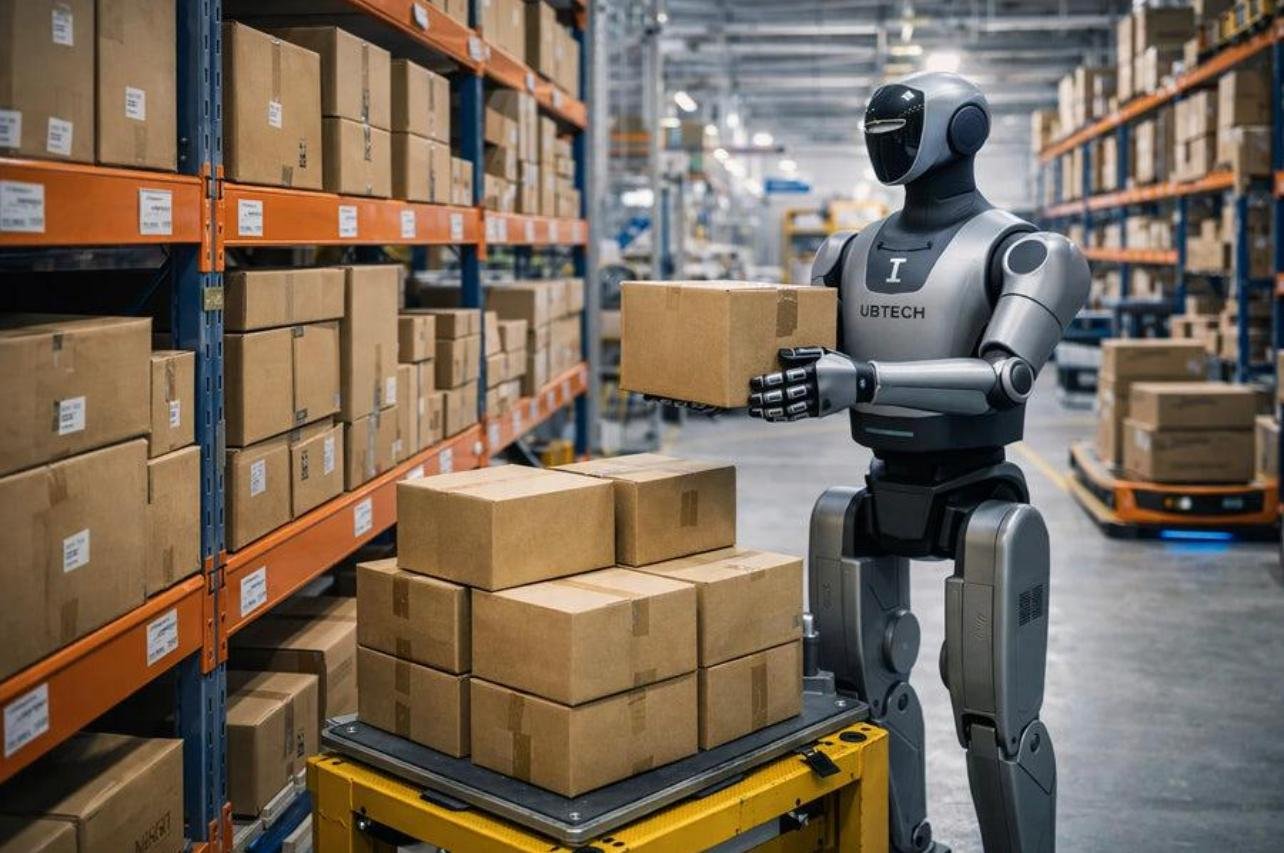
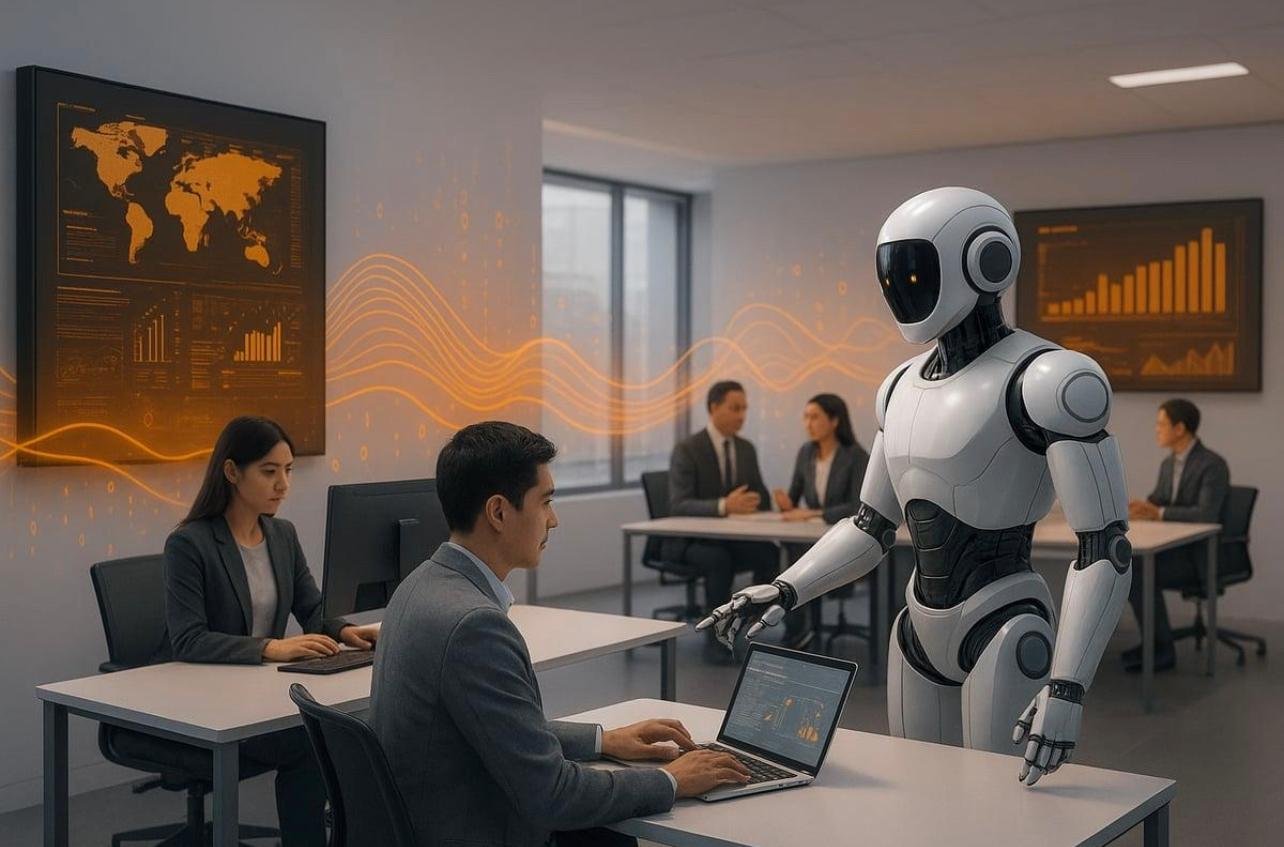
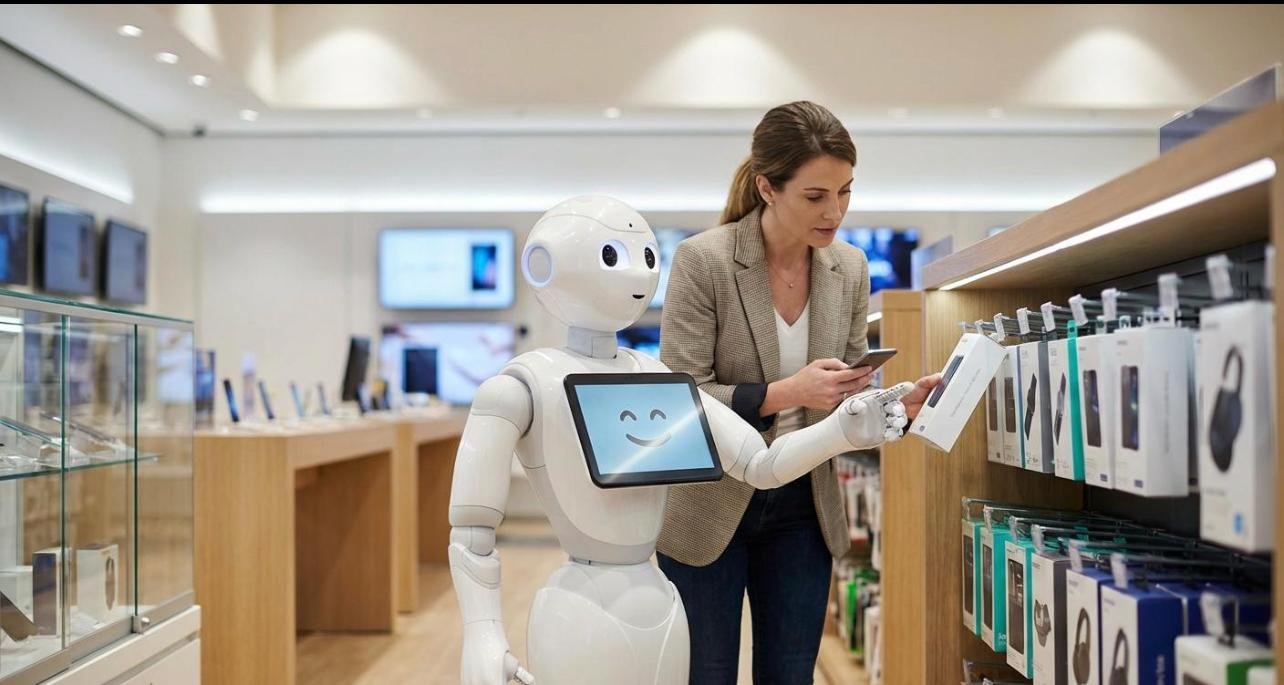
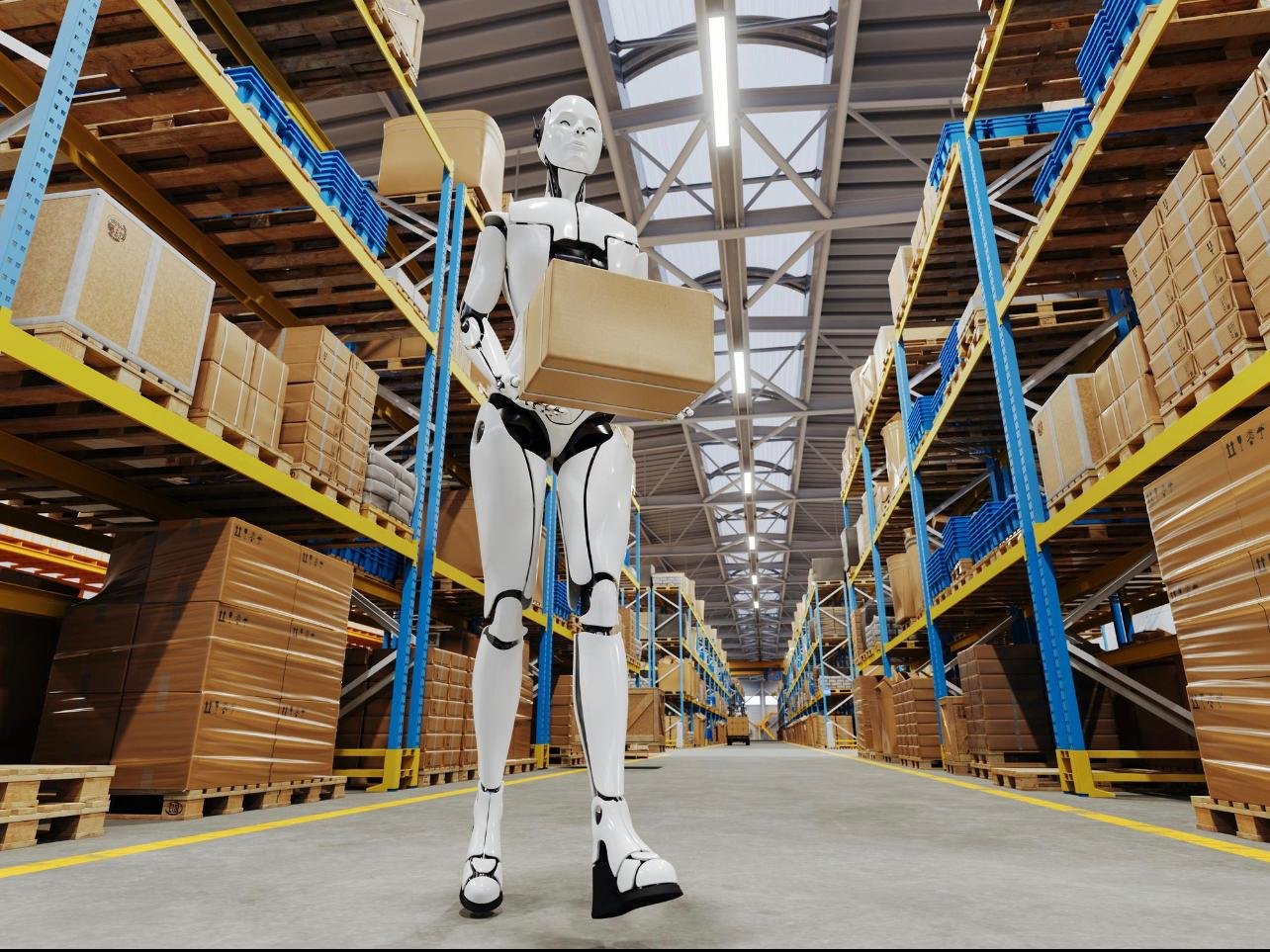
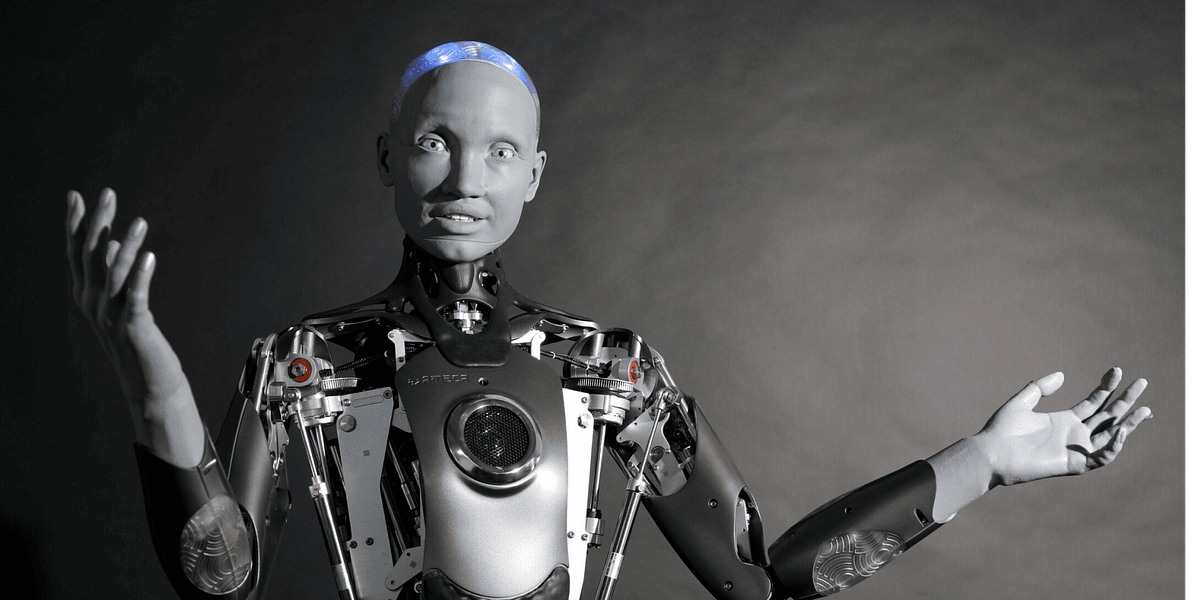
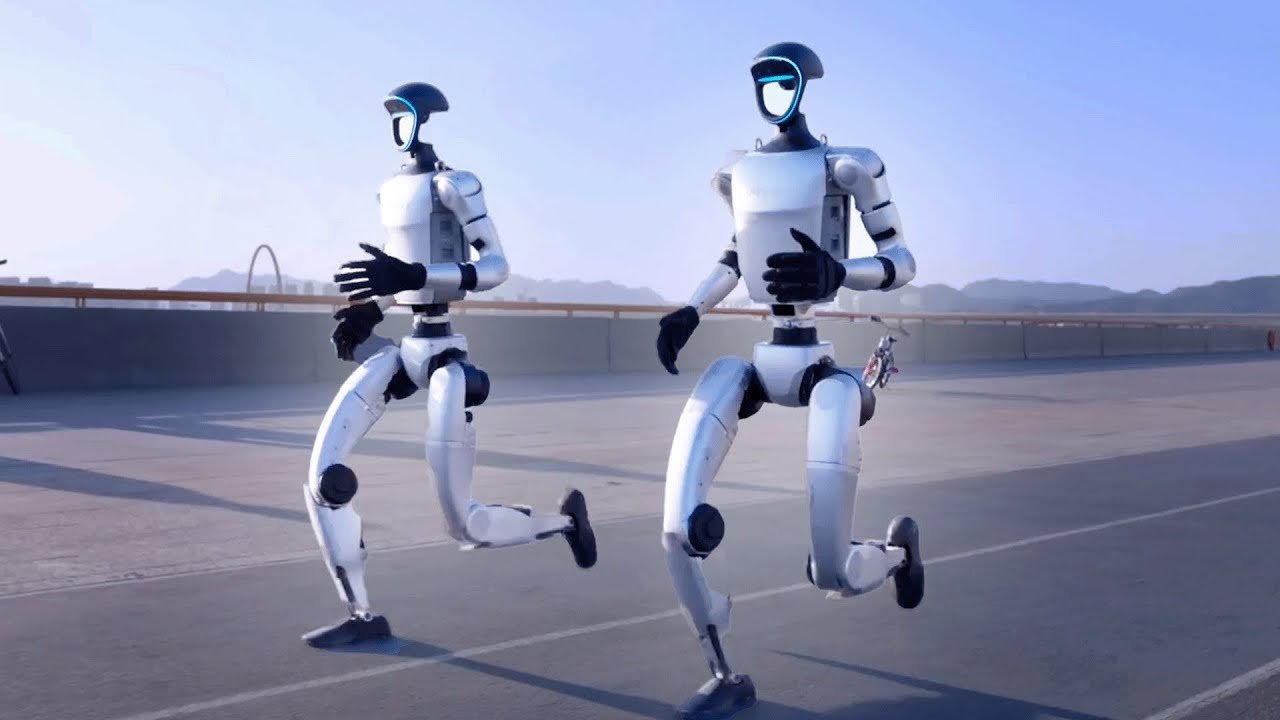
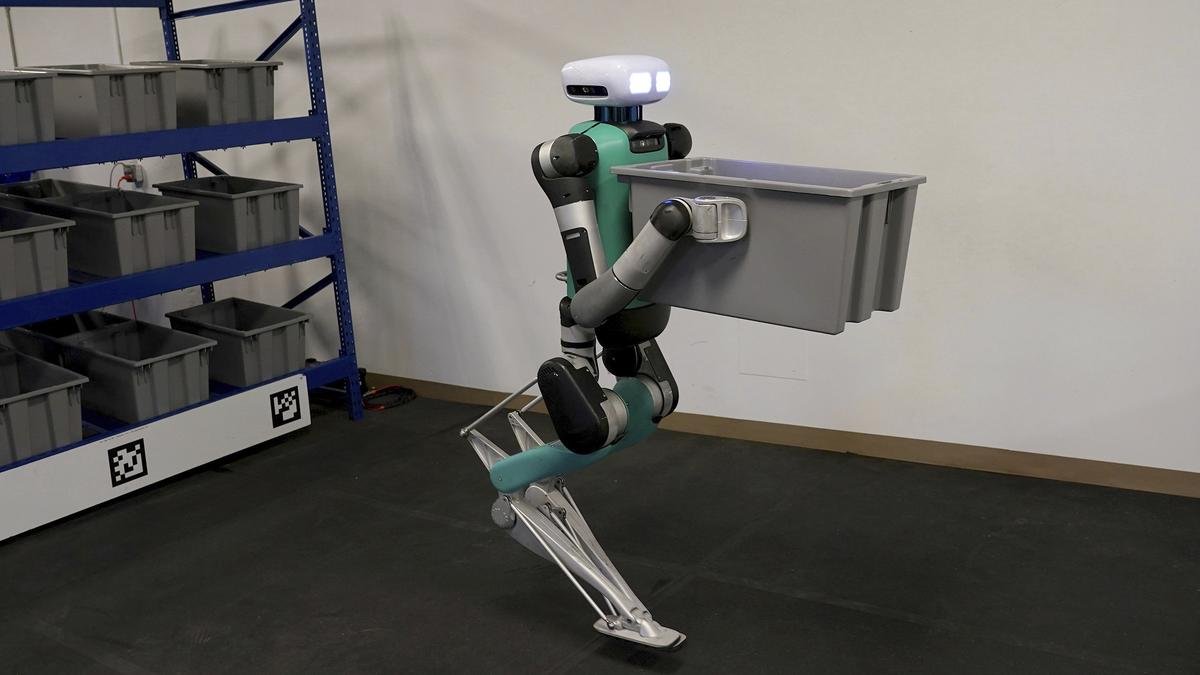
A platform on a charge dock, an operator station, a taped-off trial area and a fall mat. Less cinematic than the category's usual imagery, and considerably more like the work.



Take the detail with you
Asked before you ask
01 Are humanoid robots ready to do real work?
For a narrow set of things, yes. Service and interaction robots do their job reliably. Mobile manipulators move material and tend machines in real facilities today. Teleoperated platforms genuinely help where you need presence somewhere a person should not be. What is not ready is the version in the advertising: a machine you hire like a person, point at a job and leave alone. Bipedal platforms in particular are bought this year for research, development and evaluation, and treating one as a production resource is how a pilot becomes an expensive story.
02 Should we buy now or wait a generation?
Buy now if the value is in learning: building internal capability, understanding what your environment does to a machine like this, and being able to judge the next generation properly when it arrives. That is a real return and it is why most serious buyers in this category are buying. Wait if the business case depends on capabilities that are still on a roadmap, because generations here are short and roadmaps move. And if you have a defined, repeated task with a number attached to it, do not wait for anything: buy conventional automation now and evaluate humanoids separately, on a budget that is allowed to produce a negative answer.
03 The demo videos look incredible. Are they real?
Usually real and usually not what they appear to be. A great deal of humanoid footage across this industry is remotely operated, cut from many attempts, recorded in a prepared space, or rendered. None of that is fraudulent on its own, and a teleoperated machine can be genuinely useful, but it matters enormously to your business case. So ask three questions of every supplier including us: is this autonomous, assisted or teleoperated, how many attempts does this clip represent, and what was prepared in the environment beforehand. We will answer those in writing. Anyone who deflects has told you the answer.
04 Is it safe to have one near our staff?
Treat that as an open question rather than a feature. The established collaborative robot practice most people have in mind was written for an arm on a fixed base, and a tall, mobile or dynamically balancing machine is a different risk case with guidance still developing. In practice that means separation from people, a marked area, a trained operator present, and a plan for what happens when a legged platform falls, including what is standing nearby. Assessing and declaring the installation is the duty of whoever deploys it, together with the integrator. It is never the equipment supplier's, and any supplier who tells you their machine is simply safe around people has skipped the assessment you are legally responsible for.
05 What about the cameras and the data?
This is the question that arrives late and should arrive first. These platforms carry cameras and microphones and move through spaces where people work, so they record your staff, your visitors and your processes. Before an order, settle what is captured, whether it is stored, whether it leaves your site, who can access it and how long it is kept. In many countries you will need to notify staff and in some you will need works council or employee representative consultation, and that is a requirement rather than a courtesy. Get your legal and HR people involved at enquiry stage; it takes far less time than doing it after a machine is on site.
06 Would you tell us not to buy one?
Often, and it is the most useful thing on this page. If your task is defined and repeated, a fixed arm or a mobile robot will beat a humanoid on cost, speed, reliability and support, and we will quote that instead. If a change to a fixture or to how parts arrive removes the problem, do that first. If the business case rests on a roadmap feature, wait. And if the real objective is publicity, we will say that out loud, because a machine bought for a launch event tends to be in a corner within a year, and we would rather sell you something that is still running when we call back.
Tell us the task, and whether this is research or production
Those two answers change everything that follows. Describe what you want done, where, and what would count as success, and you will get an honest read on whether a humanoid platform is the right purchase this year or the wrong one.
If a conventional platform turns out to be the better answer, these are the categories it will land in.