
The platform,
not the paper
Research-grade robots, mobile platforms, sensing kits and development hardware supplied to universities, institutes and corporate R&D teams — with the documentation, quotations and procurement paperwork that institutional buying actually runs on.
You do the research. We supply what you do it on.
This is the page where most equipment suppliers start describing an R&D department they do not have. We would rather be useful than impressive, so here is the honest version.
AXION does not conduct research. We do not run a laboratory, we do not publish, and we hold no claim on anything you discover, build or write using equipment we sold you. What we are is a wholesaler with buying power, stock, logistics and product knowledge, serving research groups who need specific hardware, in a specific configuration, inside a funding window that does not move.
That turns out to be most of what a research buyer actually needs from a supplier. A quotation your finance office will accept. Specifications detailed enough for a tender. A straight answer about which interfaces the controller exposes, before you commit a project to it. Confirmation that the same platform and its spares will still be available in the fourth year of a doctoral programme rather than the first.
Two things we say early because they decide projects. Ask what a platform lets you reach: the most common way a research purchase disappoints is a locked controller on a machine that works perfectly. And research use often sits outside a manufacturer's documented intended use, which can affect conformity and warranty — better discussed at quotation than discovered at publication.
Why research groups buy through us
-
Your results stay yours
Everything you build, learn or publish on equipment we supplied belongs to you. We take no share, credit or claim, and we will put that in writing.
-
Quotations built for funding
Itemised, on letterhead, with a stated validity period and the detail a finance office or grant application needs rather than a price in an email.
-
Straight answers on interfaces
What the controller exposes and what it does not, before you commit a project to a platform. Sometimes that answer costs us the sale.
-
Continuity across a project
Availability and spares confirmed against your timeline, because a multi-year study needs the same hardware in its final year as its first.
-
Tender documentation
Specifications, compliance paperwork and the supporting documents public procurement asks for, prepared to the format you need.
-
One supplier, many parts
Arm, controller, gripper, sensors, cabling, mounting and the small components that hold a rig together — on one order instead of nine.
-
We do not oversell novelty
A well documented platform your students can actually work with beats a newer one nobody can support. We will say which is which.
-
An honest no
Simulate first, borrow a demo unit, buy the cheaper platform, or spend the grant elsewhere. We would rather say so than sell you the wrong rig.
What our research customers are working on
A sample rather than a limit, and described in their terms rather than ours. We supply the hardware; the work in this list belongs entirely to the groups doing it.
- Manipulation & grasping research
- Human-robot interaction studies
- Machine learning on physical hardware
- Computer vision & perception
- Mobile robot navigation & SLAM
- Multi-robot coordination
- Legged & whole-body locomotion
- Teleoperation & haptics
- Agricultural robotics trials
- Medical & rehabilitation robotics
- Laboratory & process automation research
- Undergraduate teaching laboratories
- Student competition teams
- Corporate R&D prototyping
- Proof-of-concept before production
- Benchmarking & reproducibility studies
Six classes of hardware we supply into research
Research manipulators
Arms intended for laboratory work rather than production duty, chosen for what their control interface exposes as much as for their mechanics.
Mobile & legged platforms
Wheeled, tracked and legged bases for navigation, mapping and field work, with the mounting and power provisions to carry your own payload.
Perception & sensing
Cameras, depth sensors, lidar, force and tactile sensing, plus the mounts, calibration targets and cabling that make a sensor rig usable.
Teaching & laboratory cells
Safe, repeatable, guarded setups sized for a teaching lab and for equipment that a new cohort will use unsupervised every year.
Development & evaluation kits
Smaller units for feasibility, method development and teaching before a group commits grant money to a full platform. The cheapest stage to change your mind at.
Components for custom rigs
Actuators, controllers, grippers, end effectors, frame and electrical parts for the test rigs research groups build themselves and cannot buy whole.
What every research order includes
Regardless of platform or institution. The hardware varies enormously; these are the things a research purchase should always come with and too often does not.
-
An itemised formal quotation
On letterhead, with a validity period stated, priced line by line so a budget holder can approve part of it if that is all the grant covers.
-
Interface capability confirmed
Which control modes, APIs and access levels the platform actually gives you, written down before order rather than discovered afterwards.
-
Availability against your timeline
Lead time and spares checked against your project dates and funding window, not quoted as a general figure.
-
Manufacturer documentation in full
Manuals, interface documentation, drawings and declarations as issued, not a summary sheet with our logo on it.
-
Intended use stated plainly
What the manufacturer says the equipment is for, so you can judge where your work sits relative to it before you modify anything.
-
Complete parts list for the rig
Cables, mounts, power supplies and the small components a platform needs to be usable, listed rather than assumed.
-
Procurement paperwork
Supplier forms, tax and compliance documents, tender annexes and whatever else your institution requires from a vendor.
-
Delivery your lab can receive
Crate size, weight, access and unpacking requirements confirmed up front. Research buildings are not loading docks.
How we work with labs, and where the line sits
Research supply is an arrangement rather than a product, so this table sets out the arrangement. Platform specifications live on the product pages, where they can be kept accurate per model.
- AXION supplies
- Equipment, configuration, testing, manufacturer documentation, freight, spares and the procurement paperwork institutional buying requires
- You do
- The research. The method, the experiments, the code, the analysis and the publication are entirely yours, and so is the credit
- Intellectual property
- Anything you create, develop or discover using equipment we supplied belongs to you. We claim no ownership, licence, share or co-authorship, and we will confirm it in writing on request
- Publication & naming
- You are never obliged to mention us. Equally, we will not name your institution, reproduce your results or use images of your work in our marketing without your written permission
- Open interfaces
- Ask before you buy what the platform exposes: control modes, APIs, real-time access, and whether the layer you intend to modify is reachable at all. The most common cause of a disappointing research purchase is a locked controller on hardware that works perfectly
- Intended use
- Research frequently operates equipment outside the manufacturer's documented intended use. That can affect conformity, certification and warranty. We would rather flag it at quotation than have you discover it at publication
- Safety & ethics
- Risk assessment, institutional approval and any human-subject or field-trial consent are your institution's responsibility. No supplier can carry those for you, and one that implies otherwise is doing you harm
- Modification
- Expected in research and entirely your right. Tell us what you plan to change and we will tell you what it affects mechanically, electrically and contractually before you order
- Continuity
- Availability of the platform and its spares checked against your project length, so a multi-year study is not left rebuilding its apparatus around a discontinued model
- Quotations & funding
- Formal itemised quotations with a stated validity period, in the format your finance office or funder requires. Tell us the submission deadline and we will work to it
- Grant timing
- Funding decisions and procurement lead times rarely align. We will quote before an award and hold the specification, but we cannot reserve stock indefinitely against an application. Say early where you are in the cycle
- Tenders
- We respond to public and institutional tenders and prepare the specifications, annexes and compliance documents they ask for. Send the documents rather than a summary
- Institutional terms
- Education and research pricing depends on the institution, the volume and the tender, so we quote it per case rather than publishing a percentage that would not apply to everyone
- Loan & evaluation units
- Sometimes possible, depending on the manufacturer and the platform, and worth asking about. Trying a smaller unit first is often the better spend
- Shipping to institutions
- Customs paperwork, duties, exemptions where they apply, and delivery to a building that may have no dock, a lift limit and a narrow door. Confirmed before dispatch
- Training & support
- Hardware questions come to us. Where a group wants structured operator or programming training, that is a separate scope on the Training & Technical Support page
- When not to buy
- Where simulation would answer the question, where a loan or a smaller kit would do, or where a research platform is being bought to run production work. We would rather lose the order than sell a rig that ends up unused in a corridor
Platform specifications, interfaces and availability are confirmed in writing on the quotation for your project.
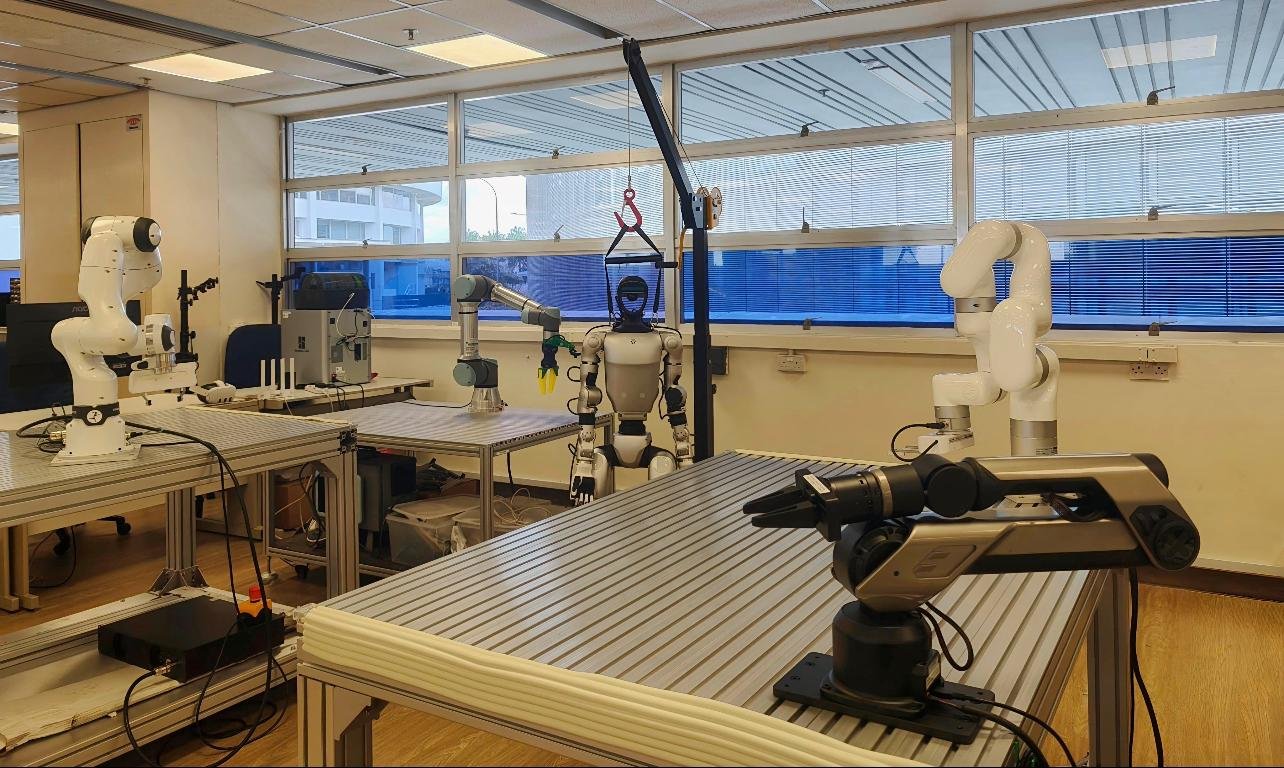
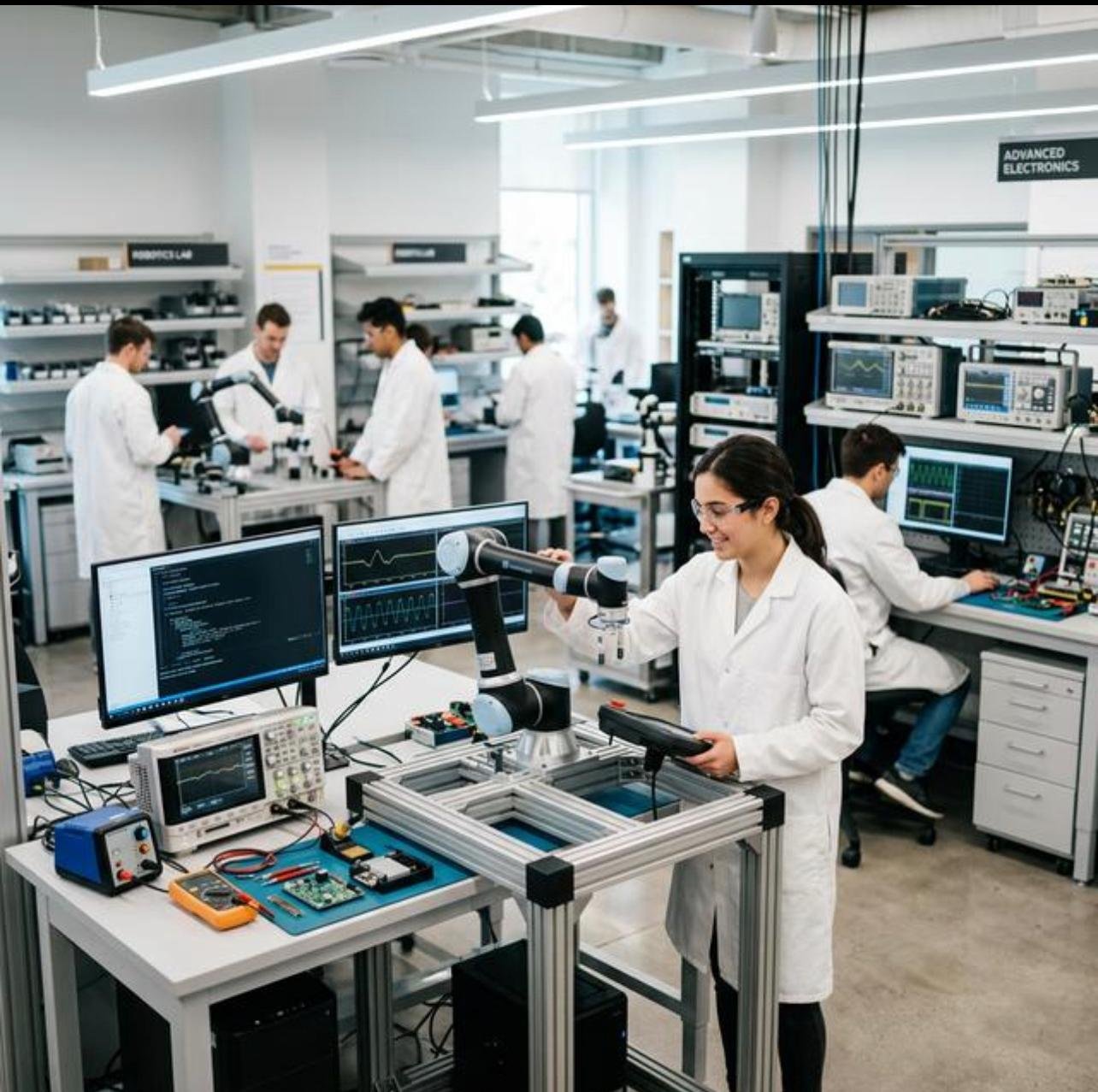
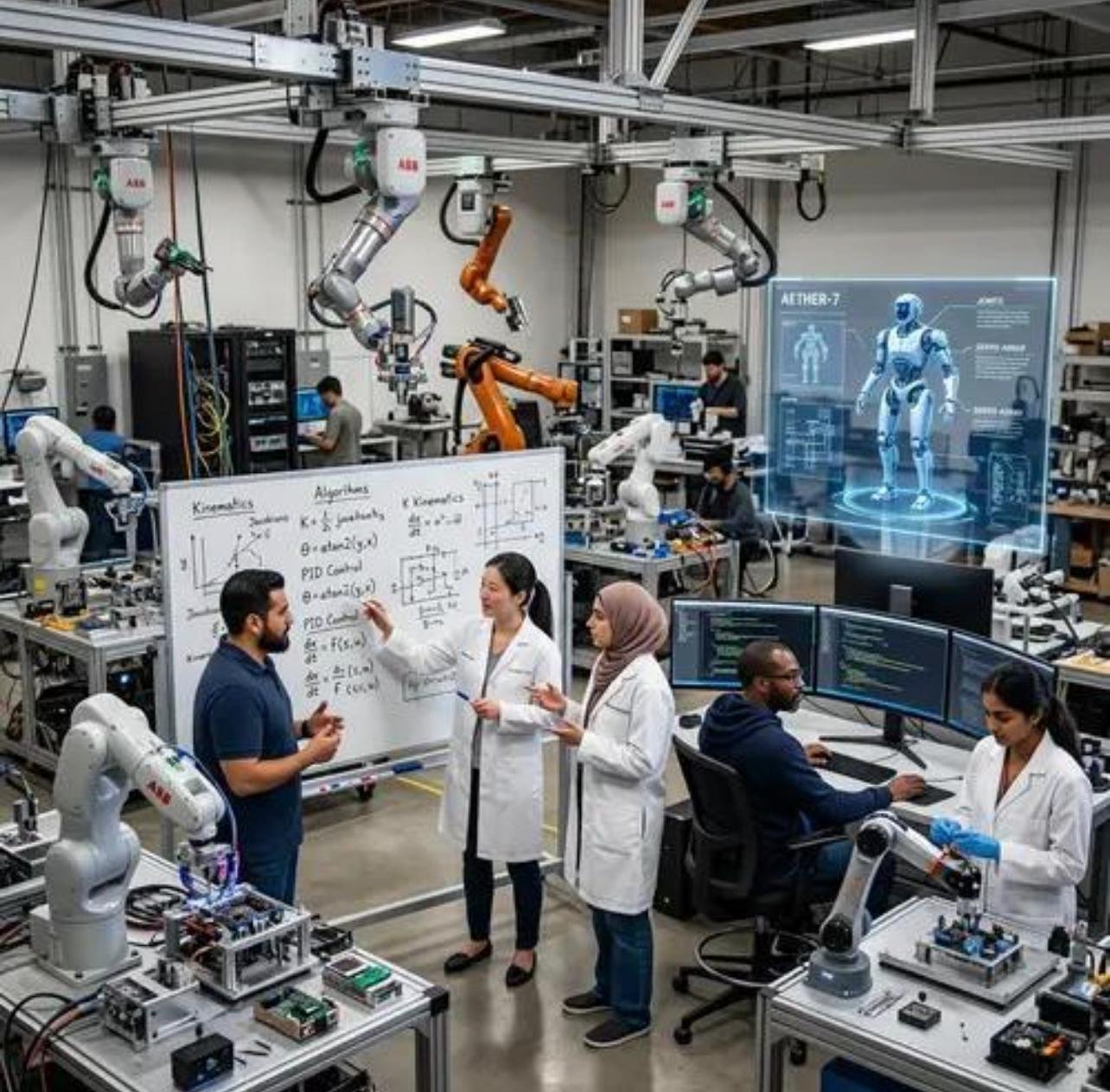
Equipment as it arrives in a lab
Benches, rigs, kits, cabling and crates — the ordinary reality of research hardware rather than the version in a brochure.







Take the detail with you
Asked before you ask
01 Do you carry out research yourselves?
No. We are a wholesaler: buying power, stock, logistics and product knowledge. We do not run a laboratory, we do not publish, and we do not co-develop. This category exists because research groups need hardware supplied properly, with documentation, formal quotations and continuity across a project, and that is a genuinely difficult thing to get right. Claiming to be your innovation partner would be flattering to us and useless to you.
02 Who owns what we develop on your equipment?
You do, entirely. Buying hardware from us gives us no claim on your methods, code, data, results or publications, and no entitlement to be named or credited. If your legal or research office wants that stated in writing rather than on a web page, ask and we will provide it with the quotation. We also will not use your institution's name or your results in our own marketing without written permission, which is why you will find no logo wall on this page.
03 Can we modify the equipment?
Yes, and in research you almost certainly will. Two things are worth knowing before you order rather than after. Modification and operation outside the manufacturer's documented intended use can affect certification and warranty, and how much depends on the manufacturer. And some platforms are far more open than others at the controller level. Tell us what you intend to change and we will tell you what it affects and which platform makes it easiest.
04 We are applying for funding and do not have it yet.
That is the normal situation, not an awkward one, and it is better to tell us at the start. We will prepare a formal itemised quotation with a stated validity period for the application, in the format your funder asks for, and hold the specification while the decision is pending. What we cannot do is reserve stock indefinitely or guarantee a price a year out. If your award has a deadline for spending, say so early, because that date usually shapes the whole purchase more than the specification does.
05 How do we know the platform will still be available in year four?
Ask us, and ask before you choose. We will check the platform's lifecycle position and spares availability against your project length, and tell you where a model looks likely to be superseded. Where continuity genuinely matters, buying critical spares with the original order is usually cheaper and always simpler than sourcing them for a discontinued unit later. This is the question that separates a purchase that serves a doctoral programme from one that quietly derails it in year three.
06 Would you ever tell us not to buy?
Regularly. Where simulation would answer the research question, where a smaller development kit would let you find out cheaply first, or where a research platform is being bought to do production work it was never designed for. Grant money spent on a rig that ends up unused in a corridor is worse for us than a lost order, because the next purchase from that department will go somewhere else. Tell us what the study is trying to establish and we will tell you honestly whether the hardware is the answer.
Tell us the research question, not just the part number
Describe what you are trying to establish and what the hardware has to let you do. You will hear back within two working days with the platforms that fit, what each one exposes, and a quotation in the format your funder or finance office needs.
If you already know the class of hardware you need, start with the category itself.